Wednesday, July 2, 2014

Yanbu, Rubbish and Traffic Hell

Well, I would start this blog with a statement: Yanbu is a rubbish dump, a garbage heap, and that's putting it mildly. I managed to do one trip of 10 weeks and gave up half way through my next trip. The place just got to me. But what did? Garbage and traffic. Now I did not live in the Royal Commission or a gated community but instead my company housed me (and my colleagues) in an apartment block about two miles south of the city centre. Of course I had to commute the 12 or so miles to the workplace (oil refinery) and face the daily (and utterly dangerous) trip. I had worked in Saudi twice before (back in the 80s) and it was pretty dire back then but on arriving in the country in February I thought things might have changed. Unfortunately they hadn't.

Our company provided transport and I shared the trip with two other expats. Daily, we just could not believe our eyes, the sight of Arab nutters weaving and swaying in and out of traffic, flying through red lights, a total disregard for other drivers on the road. In fact we saw the aftermath of four crashes in the first week! I cannot stress this enough for anyone thinking about working in Yanbu, you really are taking your life in your hands on those roads. Apart from the nutters, you have to negotiate buses and lorries, the majority of which would never pass a British MOT test, and then there is the daily carbon monoxide exhaust pollution. Clearly, the Saudis don't give a damn, and they certainly don't care much about the infrastructure either.

The problem with the rubbish is that it attracts flies and God knows what other germ-carrying insects. There are stray cats and dogs everywhere and a sickly, greasy smell permeates the atmosphere. I also lost count the number of times I saw Saudis just throw stuff out of their car windows, again disregarding motorway drivers safety - disrespect for other drivers was just shocking to witness. 

The day before I left this sad country, guess what? Yes, another crash on the main road leading to Yanbu city centre. This was a four car pile-up. How many crashes did I personally see during my brief work period in the country? Well, I lost count after 12, so it was working out on average one per week.

Anything positive to report? Well, er . . . no! In fact my advice would be if you are offered a job in Yanbu area, think twice, or do what a lot of my ex-colleagues were doing, using the job as a stop-gap to something better elsewhere.


Tuesday, May 29, 2012

Baku after Eurovision

Well, thank Christ it’s all over; I mean we are now getting back to normal after that 10 days of Eurovision Hell. I guess it must be akin to the residents of Monaco after the Grand Prix circus leaves town. But this is Baku not Monte Carlo. I watched the Grand Prix live last Sunday and for some reason kept thinking back to the two BBC documentaries that were screened during the Eurovision week. These did not paint a very pretty picture of life here and it seemed to come home when the British entry, Engelbert Humperdinck’s, Love Will Set You Free, came second last - instant karma I wondered. But then BBC FM radio broadcasts are blocked in Azerbaijan, as are Voice of America and Radio Free Europe. Which confuses the hell out of me because you can pick up these radio stations on the Internet! I cannot believe that the Azeri Government are not aware of this disparity. Never mind, the beggars have once more returned to the streets, the streets that were blocked off for the week of the concert are now open, parking restrictions have been lifted and unfortunately the seagulls have not returned to the port areas!!! Hmmmmmm!!
But was it worth it? For us expats, there was totally no interest in the event whatsoever. No expats that I know bought tickets to the shindig and in fact I came across no expats who sat up to watch it on telly - the show started at 12:00 midnight Azeri time. So anything else?
There’s the story doing the rounds that only 800 tickets were sold to foreigners attending the song contest. If you read my previous blog you will see that the authorities were expecting around 40,000 tourists and that there would be a massive shortfall in hotel rooms. As it happens, I was told that the major city hotels were told NOT to take any bookings from people other than song contest visitors. So why the shortfall? Apart from the horrendous costs of up-priced hotel rooms, and the cheapest contest tickets being sold for the equivalent of £160.00, the Azeri authorities misjudged this whole event by not taking into consideration the fact that the Olympic Games are being held in London two months later! If you were German, French, Spanish, Italian, Norwegian, Austrian, what would you choose to visit: The Eurovision Song Contest or the Olympic Games - it’s a no-brainer!
And yet the event was sold out for the final five days of the competition but where were the tourists? Walking around the boulevard area and famous Fountain Square district of Baku I have to confess of seeing few foreign visitors. And I know that the authorities were expecting droves of foreigners arriving in Baku for the event, the theory being that they would bring with them tons of tourist dollars. Unfortunately it did not happen.
So who picks up the tab? The Government - who else? The oil-rich state didn’t think twice in spending a jaw-dropping $134 million on its ‘Crystal Hall’ concert building to host the event. The costs of demolishing acres of multi-story flats and other private residences and shops around the Crystal Hall venue, is put at $90 million. If we take security and other related costs into the equation, this one week’s extravaganza has emptied the Azeri capital’s coffers to the tune of about $250 million - in other words, a quarter of a billion dollars! Well, that’s what some Azeris are telling me.
And now that the dust has settled, the 800 tourists have departed, imports can get back into full swing again, unfortunately it might be a while before the seagulls return, and it leaves one asking the question - was it worth it? Come this time next year, when I am no longer working in Azerbaijan (I am returning to the UK shortly), Europeans will be asking of themselves, ‘who won last year’s contest?’ And I will be asking just how many memories Azerbaijan sowed in the minds of those 125 million who tuned into view the event?

Friday, March 9, 2012

Azeri Eurovision Song Contest - Potential Disaster?

As I write this blog we have approximately eight weeks to go until the final of that most annoying annual event, the Eurovision Song Contest, bursts onto our television screens. But I guess only about 8% of the peoples of Europe will actually nestle down in from of the box and undergo this two hours of hopeless, self-indulging, musical kitsch. This gross indulgence can be characterised as an embarassing venture to somehow bring the disparate nations of Europe into some kind of cosy, cosmopolitan harmony. Irrespective of that, Baku is stampeding ahead getting the city into shape for the cauldrons of visitors expected to descend on the city in May.

As I look around the city and read and listen to what I can about the extensive planning that is going on, I do wonder if the Azeris have bitten off more than they can chew. Depending on what you read and who you listen to, the Azeri authorities are expecting anything between 30,000 and 50,000 visitors to the city. Oh really? Okay, let’s take an average of 40,000 visitors for the week’s event. Who and where are these people going to live? For instance just who are these 40,000 souls: music lovers, tourists, friends of contestants - just who? But more importantly can they afford to come here in the first place? I read recently that the capacity of all Baku hotels on a daily basis is circa 12,000 - 13,000 which, if my arithmetic doesn’t fail me, leaves us with a shortfall of about 28,000 - 27,000 rooms! Potential disaster?

To continue with the accommodation question, what visitors are probably blissfully unaware of is the steep costs of hotel rooms in Baku. For some insane reason the authorities continue to allow, even promote, the construction of obnoxiously expensive hotels. For instance, just last October (2011) the Hilton opened in Baku to much fanfare together with the presence of President Aliyev himself. Well, if you’re coming to Baku for the song contest and you want to stay at the Hilton, the cheapest room (single) will set you back £170/night. And remember that is during a normal month. Will they increase the cost of a room during Eurovision week? Uh-huh! Oh! I hear you exclaim. And then I read the other day that:

“Securing a hotel place in our opinion would be the most serious challenge for song contest fans. So, early bookings are highly recommended. On the other hand, all bookings for Baku hotels are not possible at the moment, since the Ministry of Tourism of Azerbaijan recommended all Baku hotels to place a total block on Eurovision 2012 week in Baku. It’s not clear what their idea is: to make some sort of centralised booking system or something else. But with the result no bookings are possible, then hotels themselves do not know when and in what direction the situation will change.”

One statistic that stood out for me like a sore thumb was the declaration that Baku was the second most expensive ex-CIS city to live in after Moscow, which was the most expensive. This was the result of a 40-city analysis of spending/costing trends in countries stretching from Estonia to Azerbaijan. Prices in Baku are high enough as it stands and Goodness only knows what it will be like during Eurovision week. I suppose I should just add just how would the local Azeris cope with an influx of 40,000 visitors in one week!

I will finish with the issue of visas. Or, probably in many cases in weeks to come, the non-issue of visas. At the beginning of last month the Culture and Tourism Ministry declared proudly that the much heralded electronic visa system would be in place for Eurovision. This would have been a blessing in disguise, it’s just that, a couple of weeks later, the same Government department declared that the electronic visa system would not be available until July of this year. This simply means that in order to attend the Eurovision Song Contest in Baku in May, you will require to have your visa processed and issued in your country of origin before even thinking about booking your flights. As the blog title states: a Potential Disaster.

I will end by adding my own personal summing up of this travelling circus, and if you are still not convinced that the ESC is for plonkers, imbeciles and stooges, take a look at Russia’s entrant for this years farce:

http://www.rferl.org/content/russian_grannies_got_to_eurovision/24509521.html

I REST MY CASE!

Thursday, December 22, 2011

Saudi Expats Beware! The Saudis are after Your Money!


When the news broke last week, it spread throughout the global expat community like wildfire. And what caused this furore? It appears that the celebrated Adel Fakieh, Minister of Labour, announced that the government was considering capping the remittances of expatriates to their home countries. In layman’s terms, the Saudis are going to put a limit on the amount of money you can send home. Surely not, I hear you say, but it’s the truth – well, it is at the proposal stage – but there is no doubt it, they’re coming after your money!

The government had raised the issue because it was/is concerned that the 8 million expat workers in the kingdom are not spending the bulk of their incomes inside the country which it says is hurting the Saudi economy. Oh dear, it’s hurting their economy! And what does all this money total? Remittances from Saudi Arabia to other countries last year were reportedly around SR100 billion ($27 billion).

What all this boils down to is the Saudi economy is on shaky ground. Okay, it may have the biggest oil reserves in the world but if we are entering a recession, there won’t be the same demand for oil and oil sales will drop and therefore a drop in oil revenues into the country. So one way to reduce the balance is to stop expats sending all their money home thus forcing them to spend more money in the country. Is this real? Can the massively, stinking rich Kingdom of Saudi Arabia really hurting that bad?

What annoys me is that if it hadn’t been for the efforts of the millions of foreign workers in the country, Saudi Arabia would be a backward State on a par with any country in sub-Saharan Africa. As one who spent five years in Saudi, I feel that in a miniscule way, I also contributed to the development and success of the country. But if I were still working there, and if this madness is passed into law, then I’d be on my bike to hell out of there! I mean Saudi Arabia is generally regarded as one of the worst countries for an expat to make a living. And to have to put up with having limitations on how much of your salary is sent home, then I think I’d be looking for alternative employment.

One Saudi commentator summed it up thus: “According to 2010 statistics, there are about 8.4 million foreign workers in the country, representing 31 percent of the entire population. A total of six million workers are employed in the private sector. This shows the extent to which foreign workers are contributing to the growth of the Saudi economy,” he said. “The Minister of Labour has not clearly outlined what is going to happen, whether it is a system to monitor all bank accounts of foreign workers and capping financial transfers, or whether it will be some form of legislative oversight to prevent violations of the country’s labour laws.”

Is this all about greed, then? It sure as hell is and as is the case with all those Middle East Kingdoms/Sheikdoms - whatever you want to call them - the ruling families absolutely glorify in unbridled riches beyond most of our dreams. So let's put it into perspective. Saudi Arabia's current weekly revenues from the sale of oil could reach more than $14.5bn a week if world crude prices continue their upward trajectory and reach a level of $120 a barrel, as predicted by Goldman Sachs.

Saudi crude production hovers around 10.7 million barrels-per-day (bpd) but by the end of this year, sustainable capacity is due to be increased to 12.5 million bpd.

Peter Burnett chief executive of UBS Investment bank in the Middle East and North Africa, which has just received a licence to operate in the kingdom, says: 'They have petrodollars flowing in and are in the process of enormous wealth creation.'

Saudi's GDP increased to 11.9% this year and this is reflected in Saudi oil exports reaching SR1.13 trillion ($302 billion), and non-oil exports to total SR150 billion ($40 billion) in 2011. This is the highest oil export figure for Saudi Arabia in its history. In other words the Kingdom of Saudi Arabia is enjoying a daily income of $1 billion a day! But, guys, they still want your expat money - so the choice is simple, if this voracious law is passed, you either stay in the Kingdom and maybe only send back about 80% of your earnings, or you do the sensible thing, find alternative employment and do a runner . . .

Tuesday, December 6, 2011

The ‘Eyes’ Have It - Saudi Style

Just when you think you’ve seen and heard it all, along comes another attention-grabber that leaves one shaking one’s head. This one comes from the great KSA, Kingdom of Saudi Arabia. I mean, you’ve really got to hand it to the Saudis when it comes to anything regarding the fairer sex. Here is the headline that grabbed my attention:

‘Saudi Women with 'Tempting Eyes' May be Forced to Cover them Up’

I mean, you couldn’t make it up! The British Daily Mail got in on the act with: ‘Saudi women with attractive eyes may be forced to cover even them up, if resolution is passed.’ So what’s it all about? Well, seemingly, there’s this codger, Sheikh Motlab al Nabet from the sensationally-named Committee for the Promotion of Virtue and the Prevention of Vice, who has promulgated this action. And what caused this Government watchdog to propose such extreme action? One report on the Bikya Masr news website suggested the proposal was made after a member of the committee was attracted by a woman’s eyes as he walked along a street, provoking a fight. Deary-dear, caused a fight, huh? Just as well she wasn’t walking along the street in a bikini - that might have caused a riot! Tut-tut! The woman in question was walking with her husband who ended up being stabbed twice in the hand after the altercation. Wait a minute, what’s an armed Saudi man doing on the street anyway?

But then it segues from the ridiculous to the downright chronic. In the same week the BBC carried this item: ‘Saudi cleric favours one-eye veil.’ The codger that came to the surface with this gem is Sheikh Muhammad al-Habadan. He suggested that Saudi women not only wear a full veil, or niqab, but one that reveals only one eye. Excuse me? Here is another purist who shudders to wonder what he might think if he caught the slightest glimpse of a beautiful woman’s eye - it reminds me of the lyrics to that Dr Hook song back in the 80s: ‘Sexy Eyes’ . . .

“Sexy eyes, moving 'cross the floor, couldn't want for more, sexy eyes
Sexy eyes, getting down with you, I wanna move with you, sexy eyes . . .”


Look, would somebody mind telling the Saudis that a woman’s eyes are one of her most provocative and sensual attributes. It’s every woman’s human right to show her eyes, to augment the look with cosmetics if she wants. And if a Saudi man cannot handle that, then he should look away. Nobody is forcing him to look at her eyes.

Now all of this begs the question, what about the 1 million plus non-Saudi expatriate women living in Saudi Arabia? They don’t cover up their faces so what is the difference between a Saudi man ogling the eyes of, say, a Filipina girl and a Saudi girl? Answer? There’s absolutely none!

Yes, it looks as though the ‘eyes’ have it this time!

Sunday, November 13, 2011

Is it Time to Get out of the Middle East?

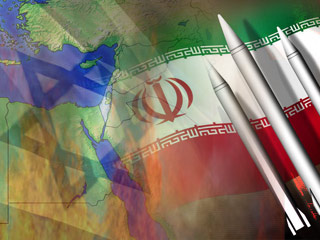
This is a question that dogged me many, many times when I worked in the Middle East between 2007 and 2010. I mean, I had three great contracts, initially in Kuwait, then on to Qatar for a year and then Oman. But why the disquiet? Two words sum it up: Israel and Iran. Even back in early 2007, Israel had already 'bombed' a so-called nuclear site in northern Syria but that whole episode fizzled out like a damp squib. But the potential bombing of Iran's nuclear facilities by Israel has reared its ugly head again.

Just last week, Mr Meir Dagan, the recent head of Mossad, the Israeli Secret Police, warned of grave consequences if Israel bombs Iran. This was in light of reports that Israeli fighter jets had conducted exercises over the Italian island of Sardinia. Their training programme included attacking distant targets, conducting midair refuelling and thwarting surface-to-air missiles. A vertical vapour trail was widely visible in the sky that afternoon as the military tested a newly developed Jericho 3 ballistic missile that can presumably also carry nuclear warheads up to 4,500 kilometers (2,800 miles).

Serious stuff, no? But it was the report that I read in the on-line version of the Guardian newspaper that really put my nerves on edge. It reported that ‘Britain's armed forces are stepping up their contingency planning for potential military action against Iran amid mounting concern about Tehran's nuclear enrichment programme.’ Really scary stuff. When I read this I thought oh surely not, surely we're not going to get sucked into another disasterous adventure by hanging on to the coat-tails of the United States!

The British Military of Defence (MOD) believes the US may decide to fast-forward plans for targeted missile strikes at some key Iranian facilities. British officials say that if Washington presses ahead it will seek, and receive, UK military help for any mission, despite some deep reservations within the coalition government. And if that wasn't enough, I then read that, British military planners are examining where best to deploy Royal Navy ships and submarines equipped with Tomahawk cruise missiles over the coming months as part of what would be an air and sea campaign.'

I won't go into the intricacies of Iran's nuclear activities; this is for more erudite mouthpieces than me to consult with, other than to say there seems to be inexorable proof that the Islamic state is up to no good.

If, and it's a massive 'if', Israel should go ahead with this nonsensical attack against Iran then the consequences are too horendous to contemplate. So, from a layman's perspective what would it mean for us expats, and, more specifically, those who are in the Middle East? When it comes to the military ramifications, then who knows where that might end, but when it comes to the global-economic side of things, then we are in no-man's land. For one thing, the Iranians will close the Straits of Hormuz; that you can be certain. This small 34 mile opening to the Arabian Gulf witnesses 17.5 million barrels of oil and 3.5 billion cubic feet/day passing through on its way to Asia, Southern Africa, Europe and the Americas. All this energy is exported from Iran, Iraq, Qatar, Bahrain, the United Arab Emirates, Kuwait and Saudi Arabia - so, big numbers, big business who pay hosts to 100s of 1000s of expats from every continent.

As mentioned previously the military scenario would be a regional and then a global disaster. Iran has proclaimed on many occasions that if attacked one of its immediate reactions would be to 'shut off' the Straits of Hormuz and attack all non-Iranian oil and gas transport ships in the area. Iran has also stated that not only Israel will come under fierce retailiation but also the Gulf states of Kuwait, Saudi Arabia, Bahrain, Qatar and Oman, because these states host US and British military resources. For instance America's 5th Fleet has it's base in Bahrain.

So what does all this war-mongering mean to the Western expat eking out a living in the Gulf? Well, the big unknown is, "when is this likely to take place?" The obvious answer is, no-one knows. On the face of it Iran presses on with construction of its 'peaceful' nuclear plants. We in the West continue to monitor developments from afar, Israel remains quiescent on the matter, and Britain hangs loose with a watching brief. For me personally, I think I would be looking for alternative employment soon. Luckily enough, I got out of the Middle East last year, having spent the two previous years in Oman. Once more, there is a problem because there just isn't the same number of energy job opportunities that there once was. And with the global economy on the brink of a double-dip recession, the question is whether one stays put in the Gulf and hopes the whole thing will fizzle out. The alternative is to shut up shop, sell your house, cash in all your earnings, and go live in the northern Himalayas on $10 a day for the rest of your life. It is an option!

Tuesday, November 1, 2011

The Eurozone and Expats - Is there a Problem?

Well, is there a problem for us expats? Simply put, yes and no. Yes in that these days whatever happens economically in one part of the world can affect other areas of the world such is the interconnectedness of our modern fiscal world. On the one hand, no, because it depends on one's financial muscle; in other words is your budgetary house in order? It would be quite cynical of me to state that, what the hell, it has nothing to do with me. I sit here quietly earning a good living, daily per diem, wonderful apartment, insurance and medical cover and other expenses covering most of my outgoings, and all seems right with my world. So, should I give a damn about Greece, Portugal, Ireland, Italy and whoever next requires bailing out?
You see what afflicts the aforementioned countries is simple mismanagement of their economies. Okay, possibly 85% of all countries have to borrow to keep their economies going. Unless you are Saudi Arabia or United Arab Emirates, et al, the simple fact is that countries have to borrow due to public spending and income tax / Government bond sales deficits. It's a bit like a householder whose salary is not enough to fund his/her monthly outgoings. What to do? Borrow the extra money - simple as that.
With Greece the problem stemmed from years of unrestrained spending, cheap lending and failure to implement financial reforms that left the country badly exposed when the global economic downturn struck. This whisked away a curtain of partly fiddled statistics to reveal debt levels and deficits that exceeded limits set by the eurozone. Again, spending beyond its means.
With 'normal' people, they are in the same boat. In the UK, it was published yesterday: 1-11-2011, that private debt has ballooned to £1.3 trillion! That is a hell of a lot of debt. And you have to consider just how all this debt is going to be paid back. Unemployment in the UK has surged past the psychological 2.5 million barrier with no sign of abating. And if there are no jobs, people cannot pay off their debt, and the double whammy is that it cuts into the Government's income tax revenues.
And then there are us expats. I think if you were to walk down any high street in the UK today and ask passers-by how much money they thought expatriate workers earn, they wouldn't have a clue. In fact many of those window shoppers couldn't even tell you what an expat is. I could tell them that it was no guarded secret that the majority of expats do what they do to earn higher salaries than back home with the added bonus that it is tax-free. And yes, most of us enjoy other perks: free medical insurance and health care, free accommodation and air fares and in many cases a daily living allowance. I knew one chap who worked a 28-28 rotation job in Qatar who only spent about £100 a month of his own money. Mind you he was a bit of a loner and one got the impression that the thought of his spending money was a sin! This basically left him banking nearly his whole salary - quite remarkable.
In my own experience I detect a certain resentment amongst some segments of society who begrudge us the lifestyles we've been accustomed to. But what they don't appreciate is that at the end of the day, many expats are away from their families and friends for extended periods of time, sometimes working in hostile environments, but then we contribute to the local economies of the countries in which we work: there's car hire, in some cases car purchase, food and beverage sales, bar bills, clothes - you name it - we have to buy many things and in some cases paying more than UK prices.
Here in Baku, Azerbaijan where I work, the cost of living is about 25% higher than the UK. So there are pluses and minuses on both sides. So am I personally all that concerned with the Eurozone crisis? No, I am not because I don't have one single pound note tied up in stocks and shares or any other volatile investment for that matter. Keeping a tight grip on my personal finances is a high priority and a similar control on my spending is tantamount to living a clean, debt-free life. These are two prudent fiscal basics of expenditure that the Greek government has nonchalantly disregarded in recent times. It could beg the question, would I be going to Greece on holiday any time soon? Hmmm, I will leave that to your imagination.